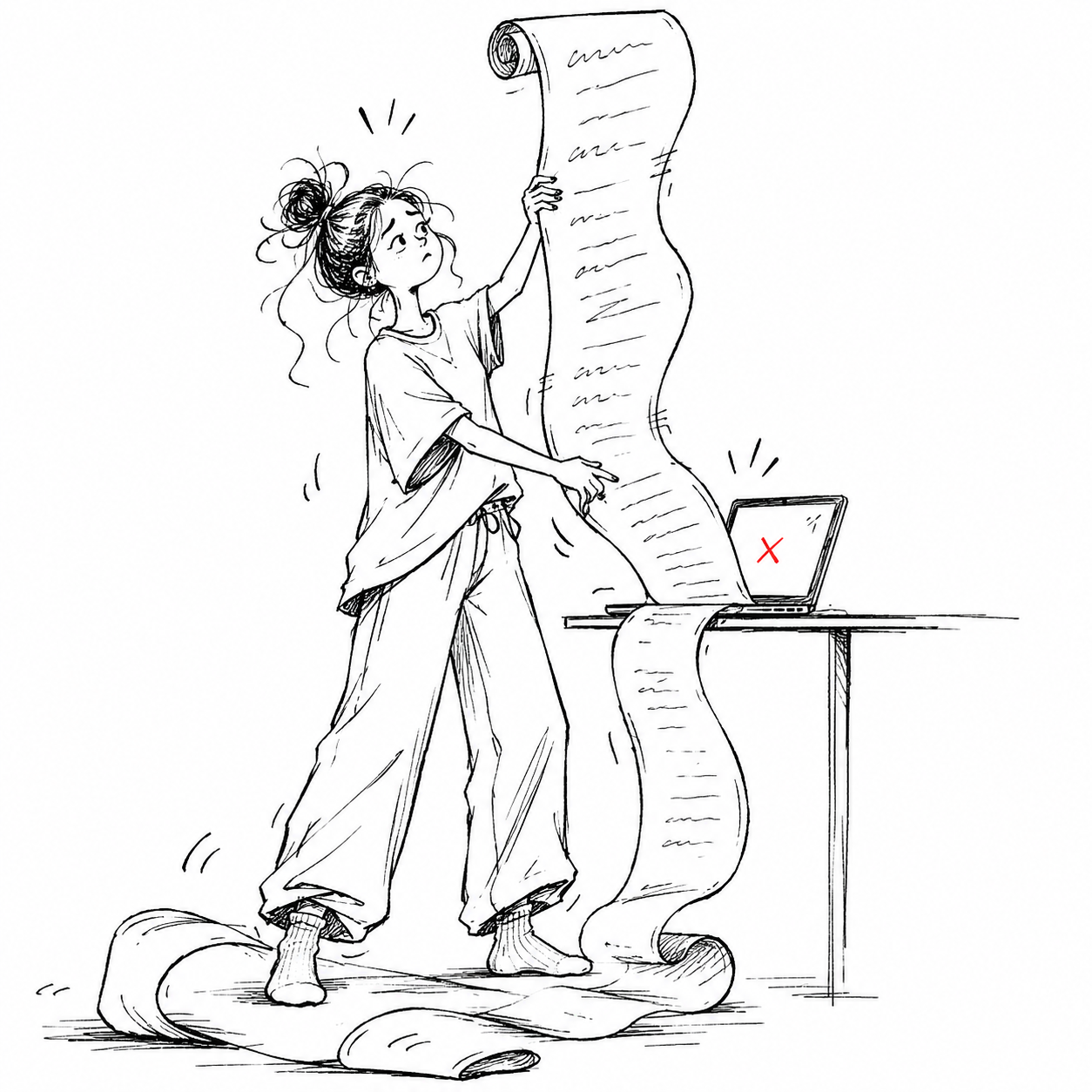
프롬프트가 너무 길어요. 그래서 안 되는 거예요.

    확신이 포괄성을 이겨요. 매번.

    4분 읽기

    계속 봐요. 누군가 400단어 프롬프트를 Claude에 붙여넣어요. 맥락 네 문단. 지시 세 문단. 예외 사항 두 문단. '자세하지만 간결하게, 그런데 철저하게 해줘'라고 부탁하는 한 문단.

    결과물은 매번 그저 그래요.

    그런데 다른 사람이 와서 타이핑해요: 'Schedule C 항목별로 이 거래들 분류해 줘.' 12단어. 완벽한 결과. 첫 시도.

    짧은 게 왜 이기나요

    긴 프롬프트는 노이즈를 만들어요. AI에게 40가지 지시를 주면 40가지를 다 만족시키려고 해요. 눈치를 봐요. 과하게 설명해요. 아무도 만족 못하는 안전하고 부풀린 결과물을 만들어요.

    짧은 프롬프트는 시그널을 만들어요. 원하는 걸 정확히 말해요. 눈치 볼 필요 없어요. 우선순위에 혼란 없어요. AI가 하나의 명확한 지시에 집중해서 잘 실행해요.

    프롬프트에서의 확신은 대화에서의 확신과 같아요. 'X가 필요해'라고 말하는 사람은 X를 받아요. '음, 아마 X인 것 같은데 Y도 괜찮고 Z도 너무 부담 아니면...'이라고 말하는 사람은 엉망을 받아요.

    "프롬프트에서의 확신은 대화에서의 확신과 같아요. 필요한 걸 말하세요. 로봇에게 사과하지 마세요."

    전후 비교
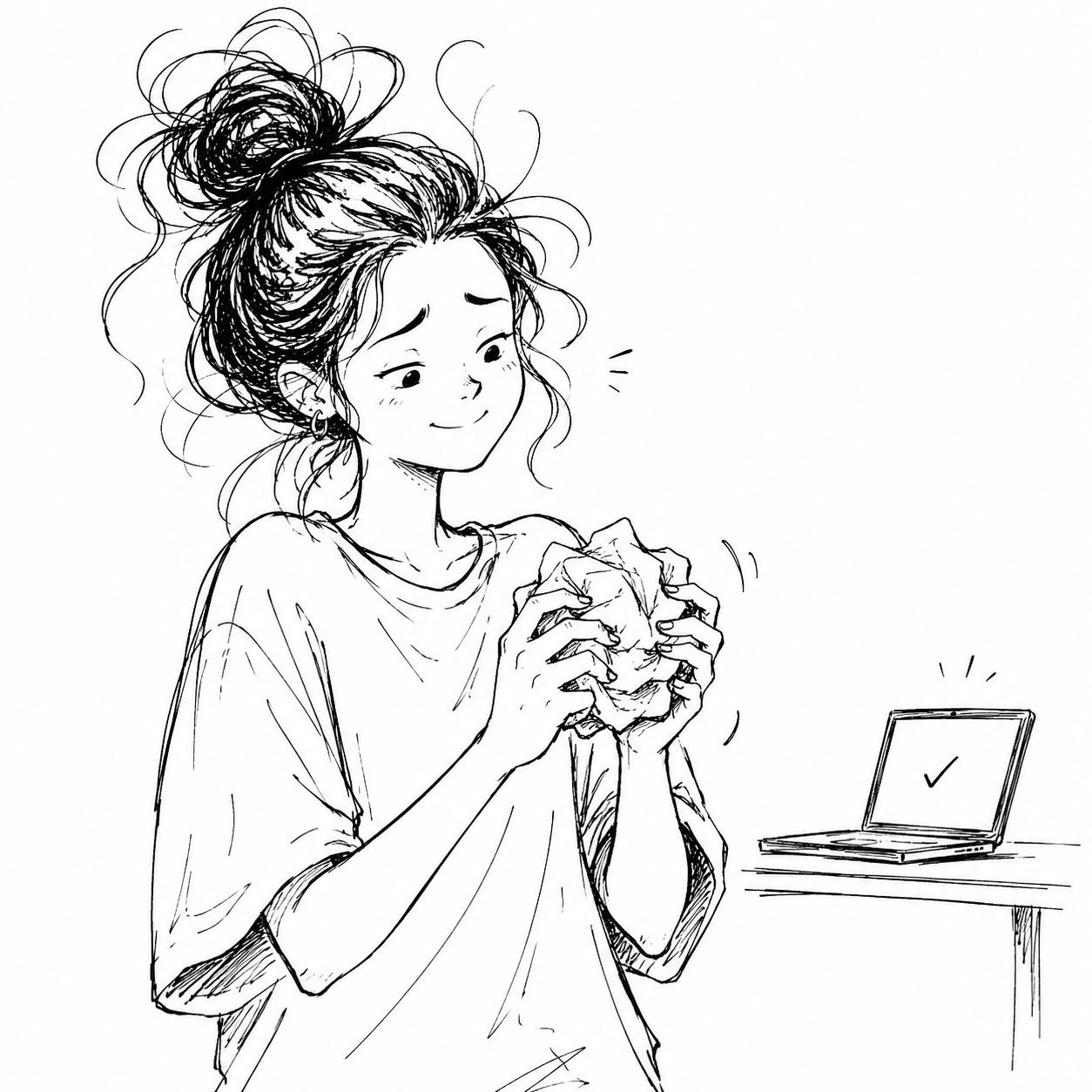
    Close-up of the woman crumpling the oversized scroll into a small ball with a relieved smile, laptop in background now shows a checkmark
    Twelve words. Done.

    안 좋은 프롬프트: '은행 계좌에서 사업 경비 목록이 있는데 적절한 세금 카테고리로 분류해 줘야 해요. IRS가 인정하는 표준 카테고리를 써줘요. 각 거래마다 어떤 카테고리에 속하는지 알려주세요. 확실하지 않으면 표시해 주세요.'

    좋은 프롬프트: 'Schedule C 항목별로 이 거래들 분류해 줘. 애매한 건 표시해 줘.'

    같은 결과. 단어 수는 10분의 1.

    안 좋은 프롬프트: '이 이메일을 더 프로페셔널하게 다시 써줄 수 있어요? 명확하면서도 너무 격식적이지 않게요. 관계가 좋은 클라이언트한테 보내는 건데 그래도 전문성은 유지하고 싶어요.'

    좋은 프롬프트: '이 이메일 다시 써 줘. 프로페셔널하면서 따뜻하게.'

    다섯 단어. 더 나은 결과. AI가 모순되는 지시에 허우적대지 않으니까요.

    규칙

    프롬프트가 원하는 결과물보다 길면 뭔가 잘못된 거예요. 프롬프트는 출발 신호여야 해요, 소설이 아니라. 할 일을 말하세요. 형식이 중요하면 형식을 말하세요. 끝.

    AI에서 최고의 결과를 얻는 사람들은 입력창에 에세이를 쓰지 않아요. 헤드라인을 써요. 명확하고, 직접적이고, 확신 있게. AI가 나머지를 해요.

    과하게 설명하지 마세요. 명령하세요.

    $1 바구니 프롬프트가 증거예요. 짧고, 테스트 완료, 효과적. 각 $1. /dollar-bin
    BrainHelpful?

    Frequently asked

    Why is my AI prompt not working even though it is really detailed?

    Probably because it is too detailed. Long prompts tend to carry instructions that contradict each other, like "be concise" next to "explain everything," and the model splits the difference instead of choosing. Cut it down to the one thing you actually want, name the format, and try again.

    Are short prompts always better than long ones?

    No. Short prompts win when the task is already clear, which is most everyday work. Genuinely complex or context-heavy tasks still need their context, and a too-short prompt there will get you a confident guess instead of an answer. The skill is matching the length to the job, not racing to the fewest words.

    What is prompt bloat?

    Prompt bloat is when a prompt is padded with so much context, hedging, and overlapping instruction that the extra words start hurting the output instead of helping it. The model spends effort reconciling contradictions and over-explaining, and you get safe, gray answers. The cure is cutting, not adding.

    How long should an AI prompt be?

    As long as the task honestly requires, and not one word longer. A good gut check: if your prompt is longer than the output you are hoping to get back, you are probably over-explaining. Name the task, name the format if it matters, stop.

    Does this work with any AI tool or just one?

    Any of them. Confidence over coverage is a property of how these models weigh instructions, not a quirk of one brand. The same short, direct prompt that works in Claude works in GPT, Gemini, Perplexity, or whatever you keep open.

    The Lazy Dispatch

    Weekly hacks for escaping the subscription economy, and our pulse on the advancements in artificial intelligence.