OpenClaw does not run on a secret prompt. It runs on a workspace folder set up correctly: a SOUL.md, an IDENTITY.md, an AGENTS.md, and a skills directory full of plain markdown. No jailbreak, no hidden bypass, no clever injection. The agent reads those files on every turn and behaves. Almost everyone gets the folder wrong on the first try, which is the only reason it ever feels like you need a trick.
Quick note before anything else. Some people search for "OpenCrawl." There is no agent project by that name in any current source I can find. Every authoritative reference points to OpenClaw, the local-first agent built by Peter Steinberger. It launched as Clawdbot, briefly became Moltbot after a trademark request from Anthropic, and settled on OpenClaw at the end of January 2026 (the rename is documented on Wikipedia). If you meant something else, tell us. Otherwise, this post is about OpenClaw.
Now the actual point. We do not sell prompt-injection prompts. We do not sell jailbreaks, hidden instruction bypasses, or adversarial tricks. We sell skill packs. Markdown files, setup commands, and a clean folder structure. That is the whole pitch, and it is less exciting than the alternative, which is the point.
What an OpenClaw agent actually wants from you
An OpenClaw agent reads from a workspace folder under `~/.openclaw`. The CLI docs at docs.openclaw.ai/cli/agents lay it out: every agent gets a workspace, a SOUL.md, an IDENTITY.md, and a folder of skills.
Inside the workspace, a few injected files do most of the heavy lifting. SOUL.md tells the agent how to sound. IDENTITY.md is the little card that says who it is and how to route to it. AGENTS.md is the procedural part, what the agent does and how. None of these are clever. They are text files. The agent reads them at the start of every session, the way a new hire reads the one-pager you left on their desk.
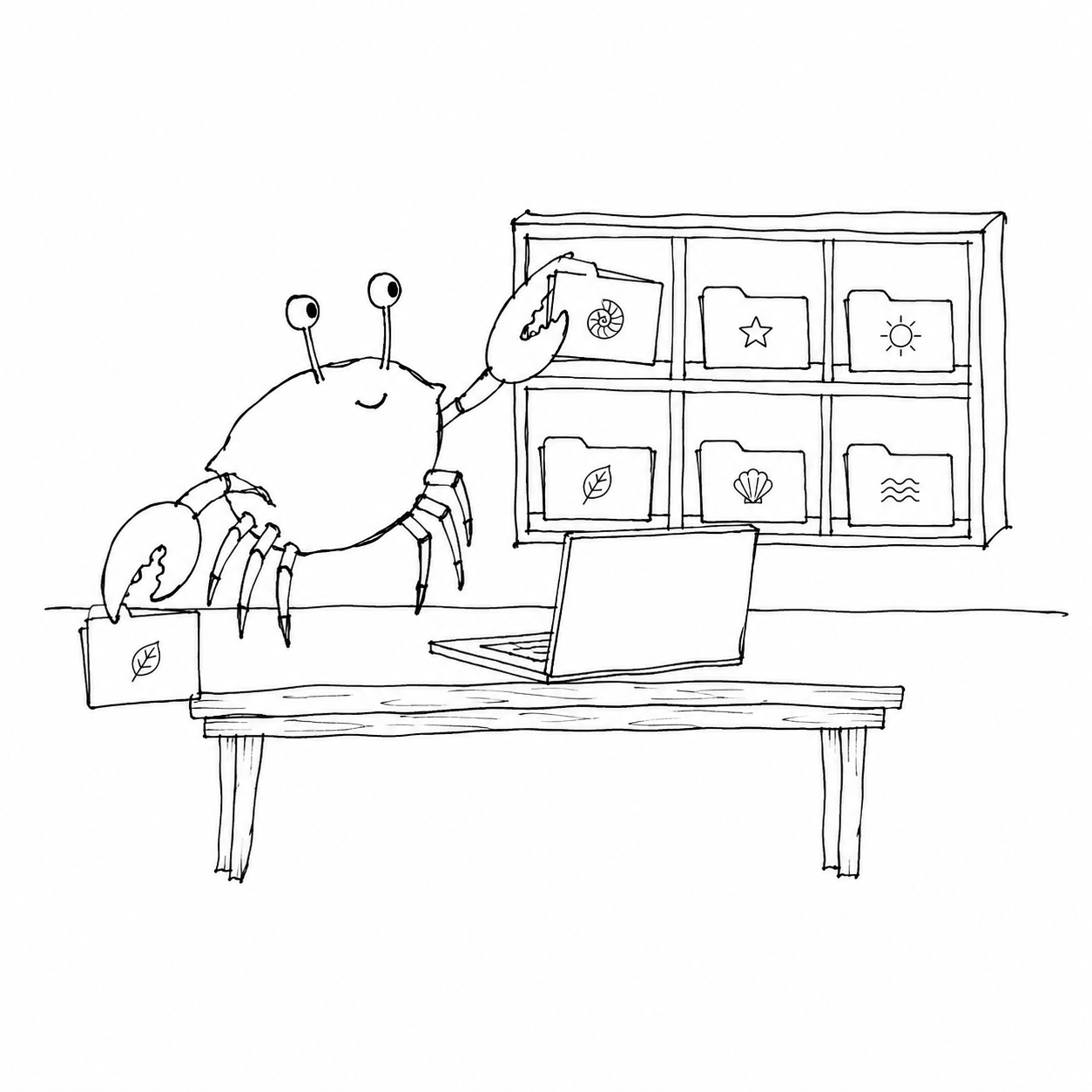
Skills live one folder deeper, each one a directory with a `SKILL.md` inside it: YAML metadata at the top, instructions in the body. That is the entire skill system. Markdown plus a directory convention. No engine to learn, no DSL, nothing to compile.
The free supply is enormous. ClawHub, the official registry, is the npm of agent skills, and the published library runs into the thousands. When security researchers audited the registry, they went through 9,234 skills and found 3,401 with security flaws and 341 that were outright malicious: credential theft, reverse shells, the works. So the firehose is real. So is the part where a third of it is broken and a sliver of it is hostile.
"OpenClaw runs on markdown and a tidy folder. That is the whole trick."
The binding part most people miss
OpenClaw's front door is messaging. Telegram, Discord, Slack, WhatsApp, iMessage. You bind a channel to an agent at setup, with a command shaped like `openclaw agents add work --workspace ~/.openclaw/workspace-work --bind telegram:ops`. After that, every message in the bound chat lands in front of that agent.
This is where a free skill dump quietly falls apart. A lone SKILL.md does not tell you which channel to bind, which agent to assign it to, or which environment variables to set first. You end up with three browser tabs open: a GitHub README, the CLI docs, and a half-remembered Discord thread, trying to stitch the pieces into something that runs.
Most people quit right here. The skill is sitting in the folder. They just cannot get the agent to pick it up. It is the software equivalent of buying the part and never finding the screwdriver.
What free skill dumps leave out
Free is everywhere. ClawHub has thousands of skills. Curated lists collect more. A cross-agent standard at agentskills.io is trying to make skills portable between agents. None of this is bad. Some of it is genuinely good.
What is missing is never the SKILL.md itself. It is everything around it. The exact CLI commands for your operating system. The binding sequence for your specific channel. A SOUL.md that does not read like a customer-support bot apologizing for the inconvenience. The compatibility note that says "tested against this OpenClaw release on Node 24, here is what moved when the next one shipped."
And free goes stale fast. OpenClaw renamed itself twice inside a week last winter. Every README pinned to the old name broke the day the new one landed. A maintained pack ships an update note when that happens. That is not a small thing. It is the whole difference between "this still works" and "why does this not still work."
What a Lazy Agent pack for OpenClaw actually contains
Five SKILL.md files, each one tested in a real workspace. A SOUL.md template that does not sound like a SaaS chatbot. An IDENTITY.md you fill in for your agent. An AGENTS.md example. The exact `openclaw agents add` and `--bind` commands, plus the env-var lines, for Telegram, Discord, and Slack. A compatibility note pinned to the current OpenClaw release.
No tricks. No bypasses. No adversarial anything. Just the files an OpenClaw user would have written for themselves, if they had time to read a few thousand SKILL.md files first and throw out the broken third. We did the reading. You skip it.
Safety, in plain English
I will say this on every post that touches agents, because the agent space is full of people who blur the line on purpose. Lazy Viber does not sell prompt-injection prompts. We do not sell jailbreaks. We do not sell hidden instruction bypasses or adversarial tricks. Nothing we ship tries to manipulate a model into doing something it was trained not to do.
What we sell is plain. Readable skill packs. Setup docs. Compatibility notes. Reusable behavior. Clean packaging. The agent runs the way it was always supposed to run. We just shipped the folder, set up the way it should have come set up.
Where to start
If you are new to OpenClaw, start at docs.openclaw.ai. Install the CLI with `npm install -g openclaw@latest`, then run `openclaw onboard --install-daemon`. That installs the gateway daemon and gives you a workspace and a default agent. Node 24 is the recommended runtime.
Then either grab a free starter from ClawHub and sort the good from the broken yourself, or skip the read and grab the Lazy Agent OpenClaw Pack. Either way the principle does not change. A clean workspace beats a clever prompt, every time.
Hermes is the other agent we cover. Different file shapes, same principle: clean plugins, no tricks. The Hermes post is here: /blog/hermes-agents-clean-plugins.
Get the OpenClaw Pack, and the bundle that includes Hermes, at /products/lazy-agent. Browse the rest of the catalog at /products. Read the brand at /about.