Should a company train staff on AI or build an AI agent department? Both, but in that order, and they are not the same project. Training your team makes your existing people faster inside a vendor's chat tool. Building an AI department means standing up a managed set of agents as a new internal function with a human director. The first is a productivity bump you rent. The second is an org-chart change you own.
Most companies do not realize they have a choice. They take the first consultant who walks in.
Someone in the leadership group reads a McKinsey memo. Someone else watches a keynote. A board member forwards a deck about agentic transformation. By the next quarter the calendar is full of intro calls, and the company has quietly defaulted to whichever consultant warmed up the slowest decision-maker first.
That is not a strategy. That is a vendor accident.
There are actually two roads. They both end with the company using AI. They are not the same company on the other side.
Road one: train your staff on the sandbox
The first road is the one most companies are already on, even if they have not named it. You buy seats. You roll out a chat tool. You bring in a trainer for two half-day sessions, sometimes a six-week curriculum. Your people learn to write better prompts. They learn which tab to open for which task. They get faster at the things they already do. Some of them get noticeably better at writing, at research, at sorting their own inboxes.
It is not nothing. It is a real productivity bump. The internal champions love it. The people who were already curious become quietly excellent. Everyone else stays roughly where they were, and the chat tool sits open in the background like a second monitor full of potential.
What you have, when this works, is a more capable version of the same workforce, operating inside the boundary of whatever the vendor lets them do this quarter. That boundary is a moving target you do not control. The model gets a new feature. A guardrail tightens. A pricing tier shifts. You adapt. You retrain. You stay inside the sandbox the vendor built for you, and you pay rent on it forever.
"If you are spending fifteen thousand a month to be kept inside a chat window, you are paying for fear management, not transformation."
There is a legitimate version of this road. For some companies, regulated, risk-averse, small surface area for automation, it is the right road. Train the people, buy the seats, stay in the chat window. Nothing wrong with it. It is honest work and it returns honest dollars.
It is also the road that most fractional CAIOs are quietly selling under another name. They call it transformation. It is training plus seats plus a slide deck. You can buy it for a year and never know there was a second road.
Road two: give birth to a department
The second road is harder to see, because it does not have a vendor selling it to you. Nobody is buying ad units against it. The keynotes do not cover it because the keynote economics do not work at that altitude.
On the second road, you do not just train your staff to use AI. You harness-engineer the environment around them, and inside that environment you build a new department. A department of agents.
Not a productivity tool. Not a slack channel. Not a chatbot bolted to a help desk. A department. With direction, scope, supervision, and a place on the org chart.
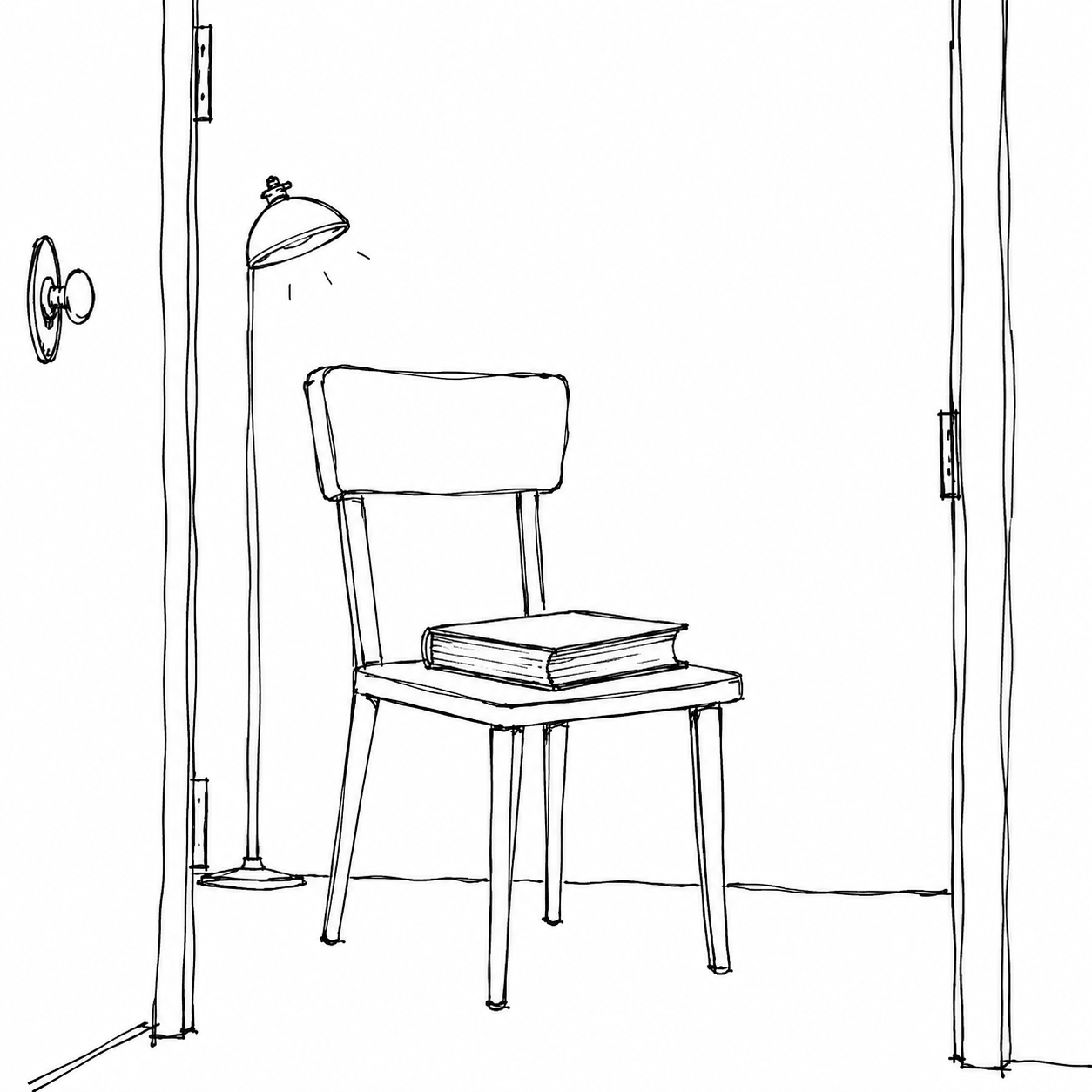
An AI department is a set of agents that operate alongside the humans you already employ. They take direction from those humans. They return work to those humans. They need someone to define what good looks like, someone to course-correct when they drift, someone to decide what to spin up next and what to retire. They are managed. They have a manager. The manager is one of your humans, with a smaller team to run.
That is the part that gets misread. Agents do not replace your workforce. They give your workforce a smaller team underneath them. The org chart adjusts down a layer. The humans move up a layer. The work moves faster, because there is now a layer of execution that does not need lunch breaks or quarterly reviews.
It compounds in a way that seat-based AI never does. Every workflow that gets handed to an agent stops being a thing a human has to do every Tuesday. Every reusable agent the team builds is now a reusable asset you own, not a feature you rent. The first quarter feels uneven. By the second quarter, the people who built the first agents are now building the agents that build the agents. That is when the curve bends.
Why giving birth is the right metaphor
Departments are born. They are not bought. They start small. They need feeding. They need a director who actually wants the job. They need a name nobody else in the company is using. They grow at their own pace, and they take on the shape of the person who started them.
You cannot buy a fully-formed department off a shelf. You cannot drop one in. You cannot let a consultant install one over a weekend and then walk away. Everyone who has ever stood up a real internal function, security, design, data, knows this. The first six months are a person and a budget line and a lot of meetings nobody else wants to attend. The next six months, the function starts existing. After a year, you cannot imagine the company without it.
An AI department is the same shape. Quieter, faster, smaller-footprint than a human department, but the same shape. It needs a director. It needs a roadmap. It needs maintenance. It needs someone who notices when an agent has quietly stopped doing the thing it was built to do.
"You cannot buy a department. You have to give birth to one. The fractional CAIO crowd is selling you a stork."
The stork is the giveaway. Anyone who shows up with a finished department in a tote bag is not selling you a department. They are selling you a story about a department, and the story ends when their contract does.
The human force still has to push
This is the part where the agentic crowd loses the room. They show you a demo where the agent does the whole job. Books the meeting, writes the report, sends the email, closes the ticket. The CEO leans back. Someone in the front row asks, what does the human do then.
The honest answer is, the human does what humans have always done in a working department. The human tells the agent what the goal actually is, which the agent cannot infer. The human reviews the work that has real consequences attached. The human catches the moment the agent is confidently wrong. The human decides what to spin up next, what to retire, what to escalate. The human is the reason the department functions, not the reason it is slow.
Agents do not run themselves. That is not a flaw. That is the design. The companies that try to skip the human-in-the-loop step lose everything they invested, because the agents drift, the data leaks, the brand voice goes sideways, and nobody notices until a customer screenshots it. The companies that embrace the human-in-the-loop step compound monthly, because the humans get better at directing the agents, and the agents get better at being directed, and the loop gets tighter.
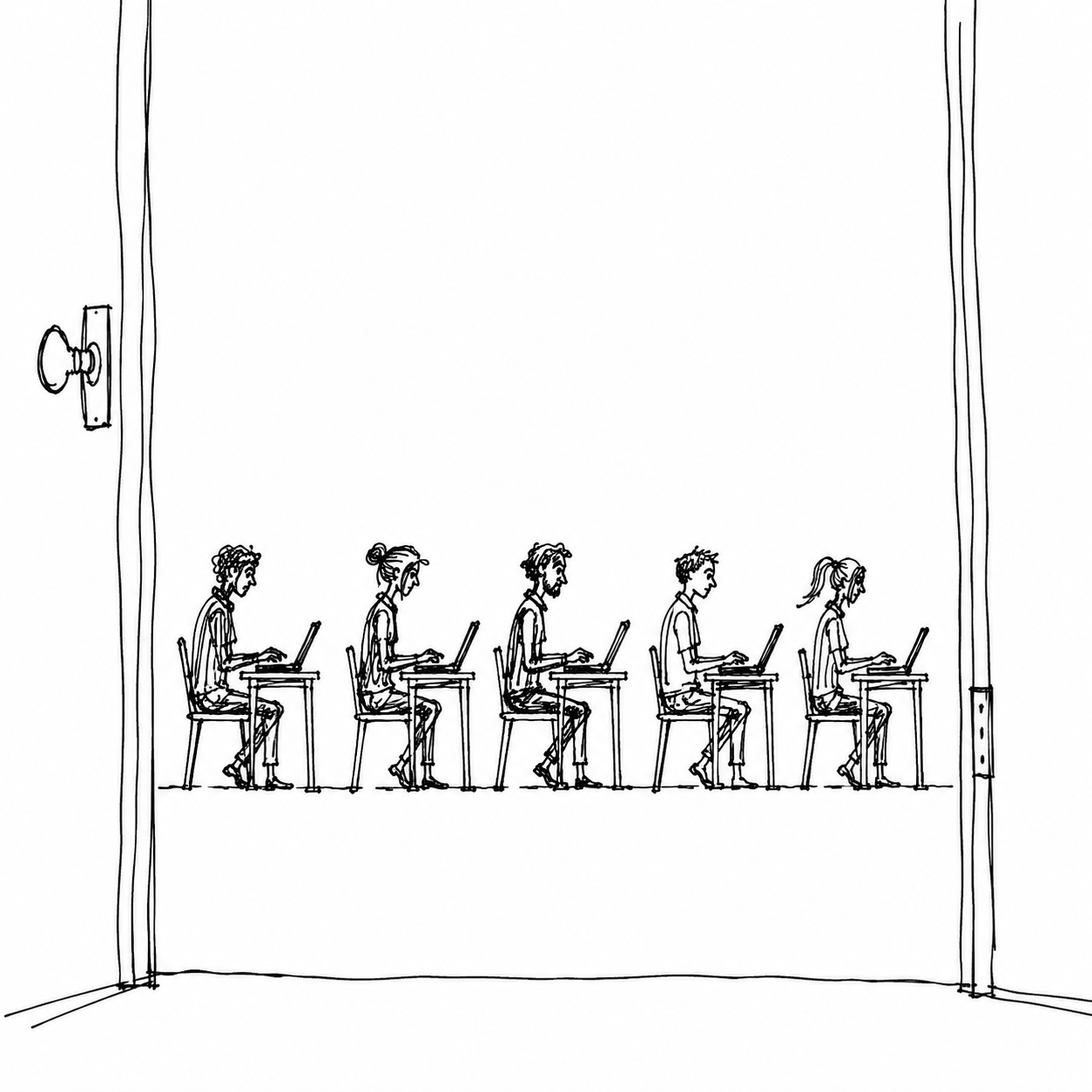
This is also why the AI department cannot be outsourced to a vendor and forgotten. The push has to come from inside the company. The directions have to come from people who know what good looks like for this business, this customer, this product. A vendor can build you the harness. A vendor cannot run your department for you any more than a recruiting firm can run your sales team.
If you want the technical depth, exactly how to choose an agent framework, what to harness-engineer, what to leave alone, the agent-decision guide goes there. Three hundred dollars, one sitting, no consulting upsell baked in. Link at the bottom of the post.
What I think about when I walk in
Here is the part I usually do not write down, because writing it down feels like giving away the consultation. I am writing it down anyway, because the person I want to hear it does not need the consultation. They need to know what kind of person they would be hiring.
When I walk into a company for the first time, I am not looking at the AI yet. I am looking at the org chart and the calendar and the way the leadership team talks about their own work. I am asking, where is the manual labor of this company hiding. Not the obvious labor. The hidden labor. The weekly reports nobody wants to write. The handoffs that lose information every single time. The decisions that get made twice because the first decision never got documented. The customer questions that get answered seventeen different ways depending on who picks up.
Those are the places a department of agents belongs. Not the glamorous places. The places where good people are spending their best hours doing work that does not require a person.
Then I look at the humans. Specifically, I am looking for the person who is going to direct the department. Every company has one. Sometimes they are senior. Sometimes they are mid-career and quietly running half the company already. They are the person other people go to when the official process breaks down. They are usually a little tired, because they have been carrying invisible load for a while.
That is the person I want to give a team of agents to. Not the executive who asked for the meeting. The person the executive trusts when something has to actually get done.
Then I look at the tooling. Not to admire it. To find the spots where a vendor has built a moat around a workflow that does not need to be vendored anymore. Most companies are paying for at least three tools that an internal agent could replace inside a quarter. I am not in a hurry to replace them. I am in a hurry to know which ones are vulnerable, because that is where the budget frees up.
And then I look at the leadership team's actual mood about AI. Not their public position. Their private one. The ones who are scared make different decisions than the ones who are curious. Both are workable. The ones who are bored are the hard ones, because bored leadership funds boring AI, and boring AI is what produces the second monitor full of unused potential.
That is the entire first visit. Org chart, hidden labor, the director-in-waiting, the vulnerable tooling, the leadership mood. I have not opened a single chat window. I have not run a single demo. The plan writes itself after that visit, because at that point I know what kind of department this company can support, who is going to run it, and what it has to replace to be worth the trouble.
"I am not in a hurry to show you AI. I am in a hurry to find the person at your company who should be running a department of it."
Two doors
If you have read this far, you are most likely a CEO or a CTO at a company that has been thinking about hiring an AI consultant for about six months. You have taken some intro calls. You have not signed anything yet. You are not sure if you are supposed to be training your team or building something deeper, and most of the people in your inbox have only sold you one of the two roads, so the question itself has felt off.
Here is the offer, and there is no trick to it.
Door one is the agent-decision guide. Three hundred dollars. One sitting. It walks you through the actual choice, sandbox training versus harness engineering, with the framework I use, the questions I ask, and the specific shape of the department you would be giving birth to. If you read it and you decide road one is right for your company, you have saved yourself a six-figure consulting cycle. That is a fair trade.
Door two is the paid audit. No free discovery call hiding in front of it. You tell the system about the company and what is keeping the decision stuck, and I turn that into a written recommendation: what to build first, what it should cost, and what not to touch. If we are a fit, the audit becomes the scope. If we are not, you still keep the plan. That is a fair trade.
Either door is fine. They both lead to the same place, a real decision, made on purpose, by a leadership team that knows it had a choice.
Door one, the guide: /products/agent-decision-guide
Door two, the call: /consulting
Most companies do not realize they have a choice. You do, now. Whatever you decide from here, decide it on purpose.