Research That Cites Its Sources.
What Is ChatGPT Deep Research?
Deep Research is a mode where ChatGPT spends real time investigating across many sources and returns a structured, cited report instead of a quick answer. The catch: give it a vague topic and you get a generic report. Give it a decision, a source bar, and a deliverable, and you get research you can actually act on.
What Actually Changes?
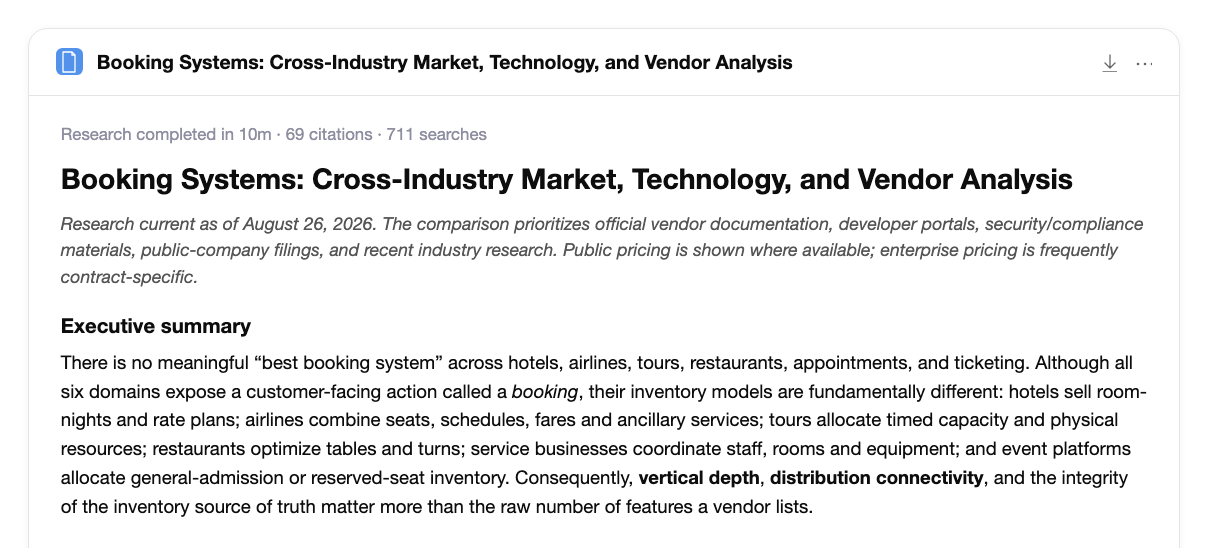
"Research booking systems for me." The report comes back broad, unsourced-feeling, and interchangeable with a listicle you could have Googled.
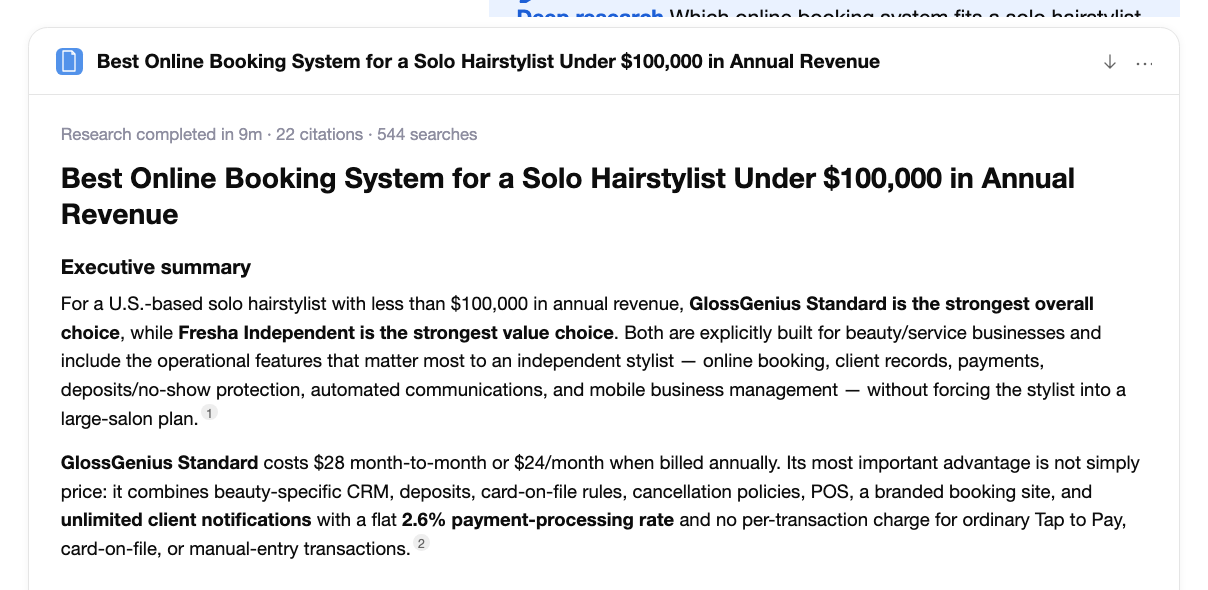
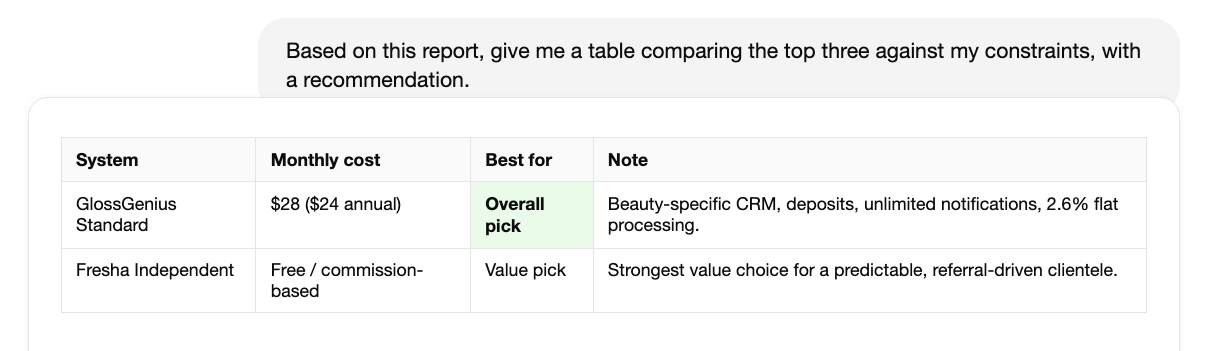
Same feature, scoped to a real decision. The report compares against stated constraints, cites every claim, and ends in a table you can decide from.
How Do You Set It Up?
Watch the walkthrough, then read the steps below.
Start With A Decision, Not A Topic.
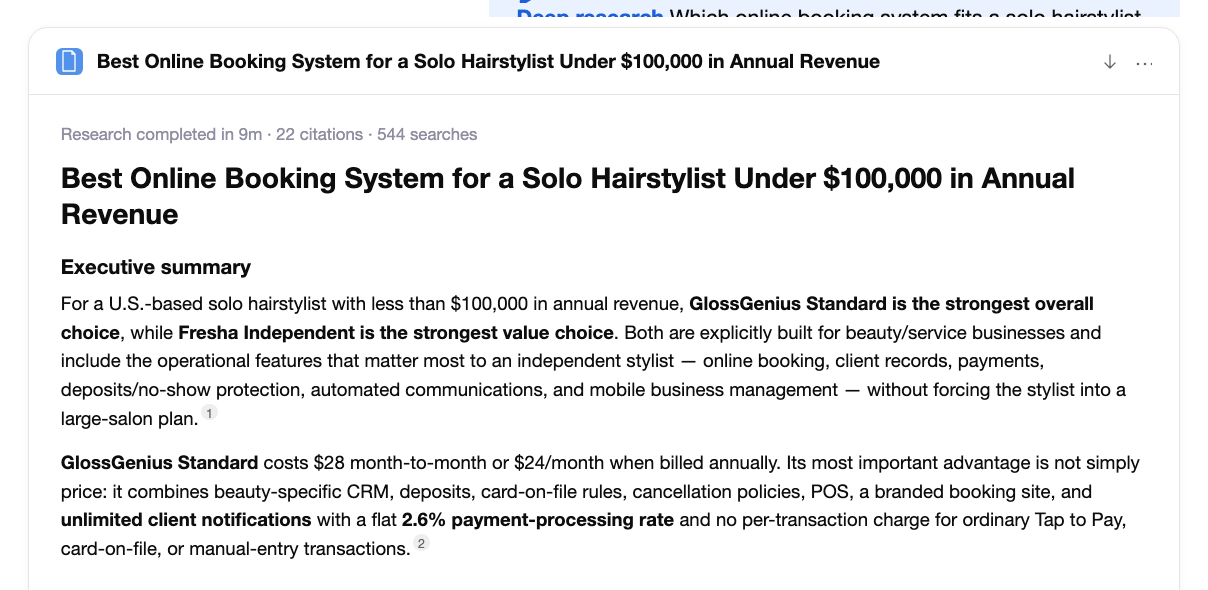
Not "research booking systems." Instead: "Which online booking system fits a solo hairstylist making under $100k a year?" A decision gives the research a finish line.
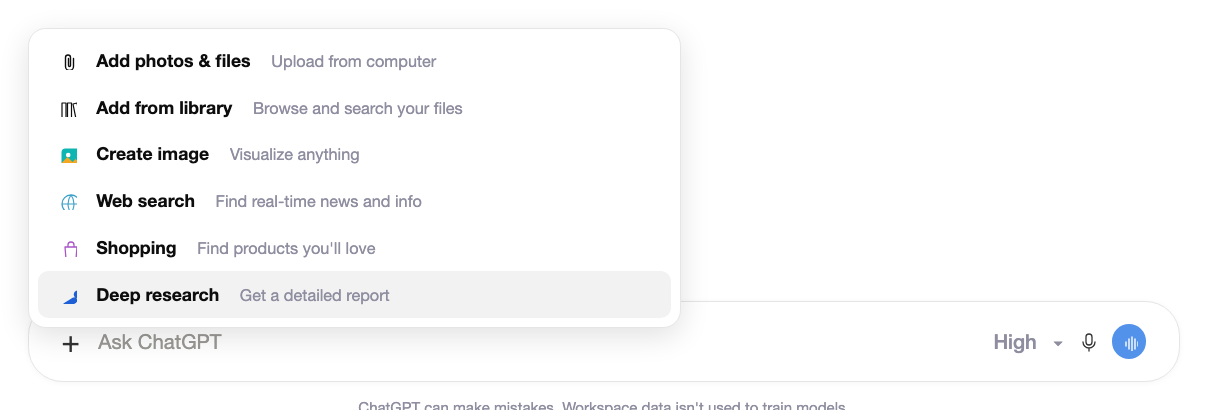
Switch On Deep Research.
Select the Deep Research mode before sending. This is a different machine than a normal chat: it plans, browses, and reads before it writes.
Set The Source Bar.
Tell it what counts: "Sources from the last 12 months. Vendor pricing pages over review blogs. Flag any claim you cannot verify." You are the editor. Act like one.

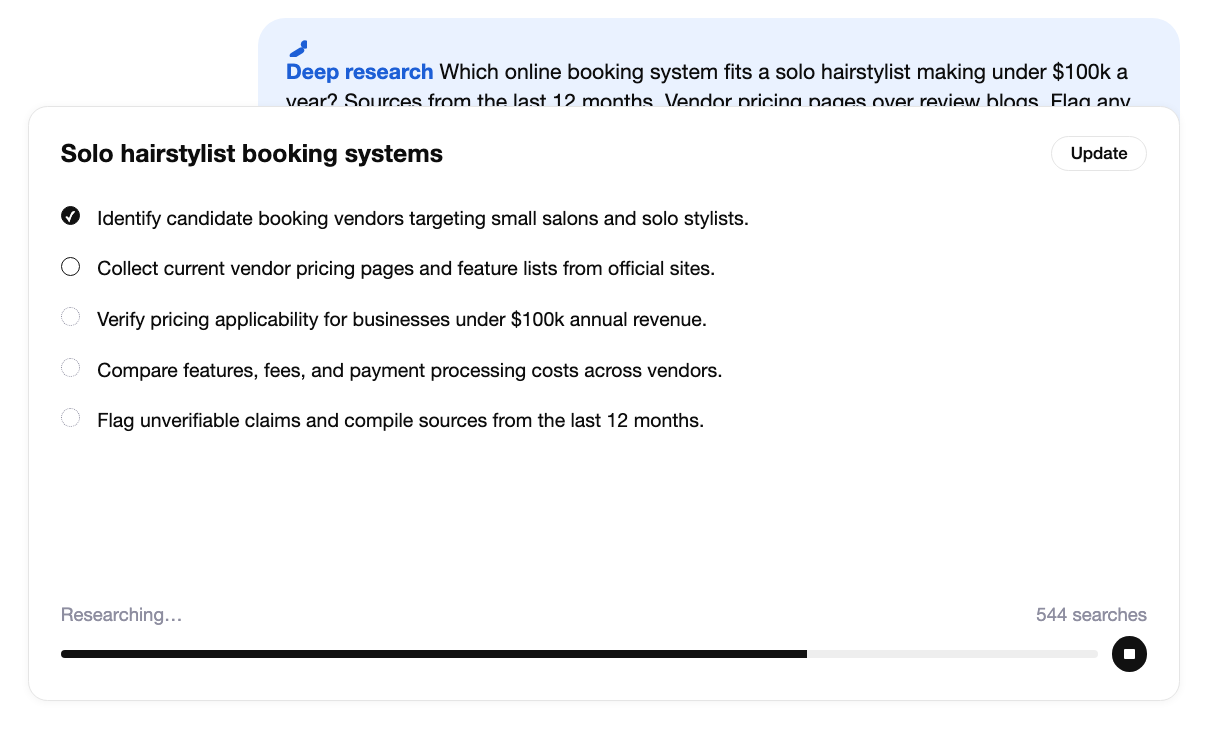
Review The Plan Before It Runs.
Deep Research proposes its approach and lets you edit, cancel, or start it. Thirty seconds here saves a twenty-minute run pointed at the wrong question.
Read The Citations, Not Just The Report.
Every claim links to where it came from. Spot-check the three claims your decision depends on. A cited report you never verify is just a confident report.
End With A Decision Table.
Ask for the finish line: "Based on this report, give me a table comparing the top three against my constraints, with a recommendation." The report was research. This is the deliverable.
What Should You Use It For?
Software and vendor decisions with receipts: compare tools against your real constraints instead of trusting a top-10 listicle.
Client-ready market and competitor research in an afternoon, with sources your client can check.
A cited starting bibliography and a map of the debate before you commit a week to the wrong thesis.
When Should You Skip It?
- •You need the answer in under two minutes. Deep Research runs long by design. Quick facts belong in a normal chat with search.
- •The decision depends on private data it cannot see. It researches the public web, not your inbox or your books.
- •You plan to paste the report somewhere unread. A cited report you did not check is a liability with a bibliography.
What Does This Replace?
Part of a basic competitor-research, market-scan, or recurring-report workflow. It does not replace specialist market data or your own judgment about what the findings mean.
Where Next?
* Tool outputs shown in video walkthroughs are representative. Results vary by account, setup, and configuration.
Verification
- Last verified:
- September 20, 2026
- Platform tested:
- chatgpt.com (web)
- Plan tested:
- ChatGPT Business
- Model shown:
- Deep Research chip on the live composer
- Official source:
- OpenAI: Deep Research help docs
- Screenshots updated:
- September 20, 2026