La méthode Lazy pour postuler à 50 jobs sans craquer
    ReadListen

    Arrête de réécrire ton CV from scratch à chaque fois

    10 min de lecture

    La recherche d'emploi est épuisante parce qu'on s'y prend mal. On traite chaque candidature comme si elle était unique alors que 80 % c'est la même chose.

    L'approche traditionnelle (épuisante)

    Lire l'offre. Ouvrir le CV. Réécrire les points pour coller aux mots-clés. Écrire une lettre de motivation personnalisée. Envoyer. Répéter 50 fois. Craquer. Abandonner.

    "Méthode classique : 45 minutes par candidature × 50 = 37,5 heures. Méthode Lazy : 10 minutes × 50 = 8,3 heures. Tu économises presque une semaine de travail."

    L'approche Lazy (efficace)

    Crée un document maître avec toutes les réalisations que tu as eues. Utilise Claude pour associer les bonnes réalisations à chaque offre. Génère des documents sur mesure en 5 minutes au lieu de 45.

    Le document maître

    C'est la clé. Il te faut un seul endroit avec : chaque poste occupé, chaque projet réalisé, chaque compétence développée, chaque métrique que tu peux revendiquer.

    La plupart de ça est déjà dans ta tête ou dispersé dans d'anciens CV. Passe un après-midi à tout consolider.

    Lettres de motivation en 2 minutes

    Même processus. Colle l'offre. Demande : « Écris une lettre de motivation en 3 paragraphes reliant mon parcours à ce poste. Sois spécifique, pas générique. »

    Le résultat n'est pas parfait, mais c'est à 90 %. Tu ajoutes ta touche en 2 minutes.

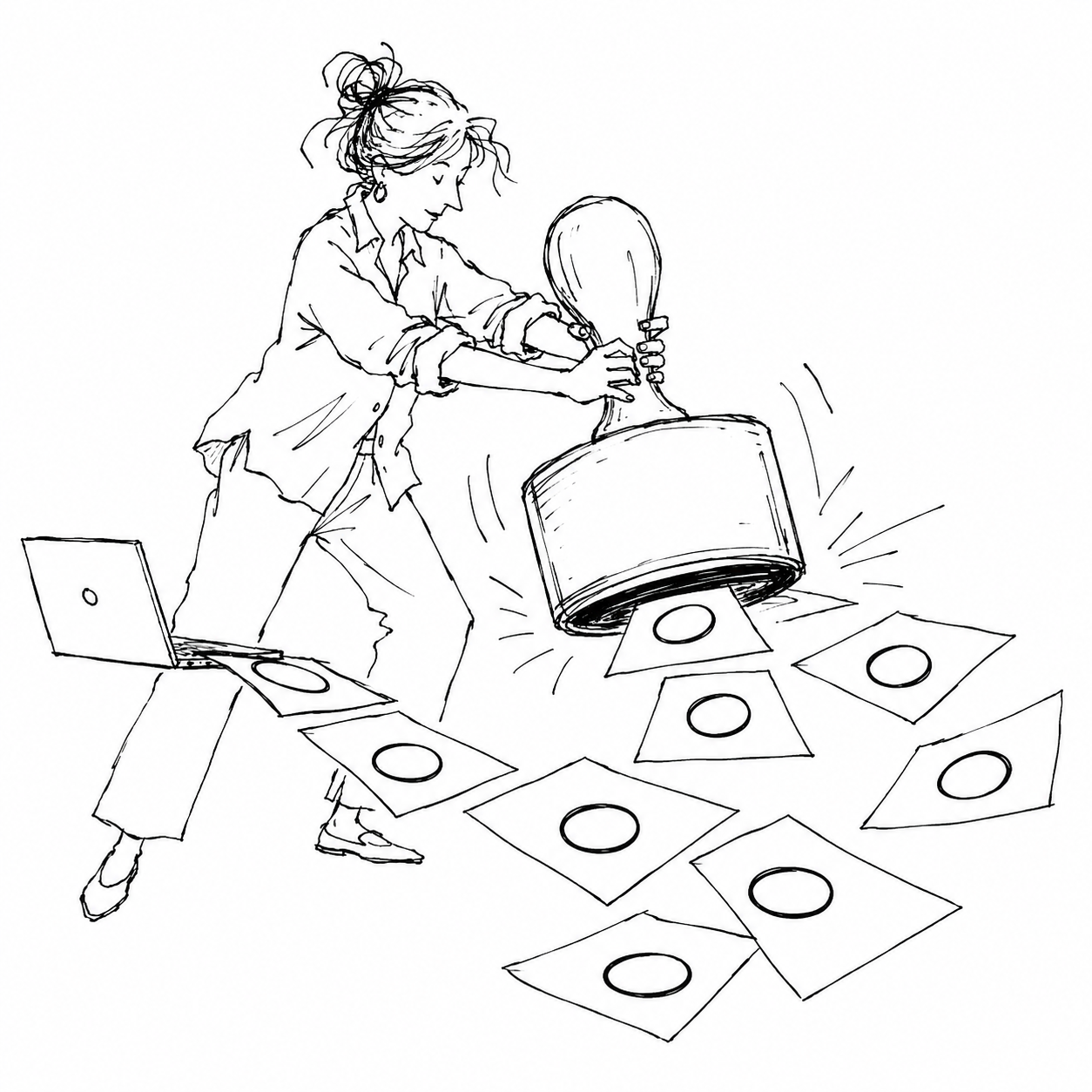
    Close-up of the oversized rubber stamp crushing a job-application rectangle, ink-mark imprinting in the moment of impact
    Job hunting doesn't have to be painful
    BrainHelpful?

    Frequently asked

    How long does it take to apply to 50 jobs with this method?

    About 8 hours of focused work, versus roughly 37 if you rebuild each application by hand. The split is one afternoon to build your master document once, then around 10 minutes per application to let the AI tailor your bullets and draft a cover letter while you add your voice. The afternoon is the investment. The 10-minute applications are the payoff.

    Is it cheating to use AI to write my resume and cover letters?

    No, as long as everything is true. You are not inventing experience, you are selecting and phrasing experience you actually have. That is the same thing a good career coach charges you for. The line you do not cross is letting the tool claim a skill you do not have, which is why a good prompt asks it to flag where your background is thin instead of bluffing.

    Will an applicant tracking system reject my resume if I use AI?

    No. An ATS sorts and surfaces resumes for a recruiter to read; it is not a robot deleting you for using AI. Matching the posting's real language helps a busy human find the relevant parts faster, since the average resume skim is about seven seconds. Stuffing in keywords unnaturally hurts, because both the software and the recruiter notice. Use the words the way a person would.

    What goes in the master document?

    Every job, every project, every skill, and every metric you can honestly claim, all in one file. Pull it from old resumes, LinkedIn, performance reviews, and memory. Put real numbers on whatever you can, because a specific number is what a stranger can picture in a seven-second skim. You build it once and reuse it for every application after.

    Which AI tool should I use for this?

    Any capable assistant works. Claude, ChatGPT, Gemini, and others all handle the match-and-tailor job. Claude Pro runs $20 a month and does this plus fifty other things, so if you already pay for one of these, the job search costs you nothing extra. The method matters more than the brand of tool.

    Related product

    Lazy Job Search

    Apply to 50 jobs without burning out.

    The Lazy Dispatch

    Weekly hacks for escaping the subscription economy, and our pulse on the advancements in artificial intelligence.